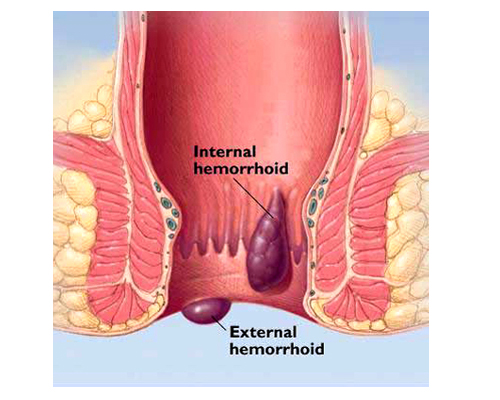
Piles or Hemorrhoids are among the most common ailments today, especially in the Western world. They are varicose and often inflamed condition of the veins inside or just outside the anus. Hemorrhoids are vascular structures in the anal canal which help with stool control. They become pathological or piles when swollen or inflamed.
In their physiological state they act as a cushion composed of arterio-venous channels and connective tissue that aid the passage of stool. The symptoms of pathological hemorrhoids depend on the type present. There are two types of hemorrhoids, external and internal, which are differentiated via their position with respect to the dentate line. Internal hemorrhoids usually present with painless rectal bleeding while external hemorrhoids present with pain in the area of the anus but, not much bleeding.
In the case of internal piles, there is discharge of dark blood. Nearly 40 per cent of people suffer from piles at some stage of their lives. Symptoms The most common symptom of internal hemorrhoids is bright red blood covering the stool, a condition known as hematochezia, on toilet paper, or in the toilet bowl. They may protrude through the anus.
Symptoms of external hemorrhoids include painful swelling or lump around the anus. The patient cannot sit comfortably due to itching, discomfort and pain in the rectal region. Certain complication may arise in case piles are untreated or if they are not treated properly. Profuse bleeding may lead to anemia, causing weakness, tiredness and lethargy.
Sometimes piles which come out of the anal opening cannot go back due to spasm at the anal opening. This may lead to clotting of blood, giving rise to sudden swelling and pain. In advanced degree of piles, ulceration may develop due to friction, and cause bleeding. Causes The primary cause of piles is chronic constipation and other bowel disorders. The pressure applied to pass a stool to evacuate constipated bowels and the congestion caused by constipation ultimately lead to piles.
The use of purgatives to relieve constipation; result in enlargement and inflammation of veins & bleeding of the mucous lining by their irritating and weakening effect on the lining of the rectum. Piles are more common during pregnancy and in condition affecting the liver and upper bowel. Other factors that can increase the rectal vein pressure resulting in hemorrhoids include obesity and sitting for long periods of time.
During pregnancy, pressure from the fetus on the abdomen and hormonal changes cause the hemorrhoidal vessels to enlarge. Delivery also leads to increased intra-abdominal pressures. Prevention The best way to prevent hemorrhoids is to keep stools soft so they pass easily, thus decreasing pressure and straining, and to empty bowels as soon as possible after the urge occurs.
Exercise - including walking, and increased fiber in the diet help reduce constipation and straining by producing stools that are softer and easier to pass. Spending less time attempting to defecate and avoiding reading while on the toilet have been recommended.
Dietary Considerations - The treatment of the basic cause, namely, chronic constipation, is the only way to get rid of the trouble. To begin with, the entire digestive tract must be given a complete rest for a few days and the intestines thoroughly cleansed. For this purpose, the patient should adopt an all-fruit diet for, at least, seven days.
Thereafter he may adopt a diet of natural foods aimed at securing soft stools. Treatment There is no local treatment to cure piles. The treatment of the basic cause, namely, chronic constipation, is the only way to get rid of the trouble. To begin with, the whole digestive tract must be given a complete rest for a few days and the intestines thoroughly cleansed. For this purpose, the patient should adopt an all-fruit diet for at least five days.
He should have three meals a day of fresh juicy fruits such as grapes, apple, pear, peach, orange, pineapple and melon. For drinks, unsweetened lemon water or plain water either hot or cold may be taken.
Natural cures for Piles (Haemorrhoids) -
Dry Figs - The use of dry figs is one of the most effective home remedies for piles. Three or four figs should be soaked overnight in water after being cleaned thoroughly in hot water. They should be taken first in the morning along with the water in which they were soaked. They should also be taken in the evening in a similar manner. This treatment should be continued for three or four weeks.
The tiny seeds of the fruit possess an excellent quality of stimulating peristaltic movements of the intestines. This facilitates easy evacuation of faeces and keeps the alimentary canal clean. The pressure on the anus thus being relieved, the hemorrhoids also contract.
Mango Seeds - Mango seeds are an effective remedy for bleeding piles. The seeds should be collected during the mango season, dried in the shade, powdered, and kept stored for use as medicine. This powder should be given in doses of about one and a half to two grams with or without honey, twice daily.
Jambul Fruit - The jambul fruit (Syzygium cumini) is another effective remedy for bleeding piles. The fruit should be taken with salt every morning for two or three months during its season. The use of the fruit in this manner during every season will ensure a complete cure and save the user from bleeding piles for his entire life.
Radish - White radish is considered highly valuable in piles; 100 mg of grated radish mixed with a teaspoon of honey may be taken twice daily in treating this condition.
This vegetable can also be taken in the form of juice mixed with a pinch of salt. It should be given in doses of 60 to 90 ml, morning and evening. White radish, well ground into a paste in milk, can also be applied over inflamed piles masses to relieve pain and swelling.
Turnip - The leaves of turnip have been found useful in this disease. The juice of these leaves should be extracted and 150 ml given to the patient. It is, however, necessary to take a proper diet of raw fruits and vegetables while taking this juice. For better results, 50 ml of the juice should be mixed with equal quantities of juices of watercress, spinach, and carrots.
Bitter Gourd - The juice of the fresh leaves of bitter gourd is also valuable in piles. Three teaspoons of the leaf juice, mixed with a glass of buttermilk, should be taken every morning for treating this condition. A paste of the roots of the bitter gourd plant can also be applied over piles with beneficial results.
Ginger - Ginger is also useful in this disease.
Half a teaspoon of fresh ginger juice, mixed with one teaspoon each of fresh lime juice and fresh mint juice, and a tablespoon of honey, constitutes an effective medicine for piles.
Onion - Onions are valuable in bleeding piles. About thirty grams of this vegetable should be finely rubbed in water and sixty grams of sugar added to it. It should be taken twice daily by the patient. It will bring relief within a few days. Onion is also useful in the treatment of dry piles. A crushed onion, skinned and roasted in aches, may be applied with beneficial results.
Rice - Rice has very low fibre content and is, therefore, extremely soothing to the digestive system. A thick gruel of rice, mixed with a glass of buttermilk and a ripe banana, given twice a day, is a very nutritious diet for a patient with piles.
Wheat Grass - Wheat grass juice used as an enema helps detoxify the walls of the piles. The general procedure is to give an enema with lukewarm or neem water.
After waiting for twenty minutes, 90 to 120 ml of the wheat grass juice enema is given. This should be retained for fifteen minutes.
Sesame Seeds - Sesame seeds are also valuable in piles. They can be taken in the form of a decoction by boiling twenty grams of seeds in 500 ml of water till it is reduced by one-third; they can be given with butter for bleeding piles.
Chebulic Myroblan - The herb chebulic myroblan is a popular remedy for piles. It is very effective as a laxative and is highly astringent. The fruit should be roasted to a brown colour in caster oil, and then powdered and stored. Half a teaspoon of this powder at bedtime will bring about normal bowel movements in the morning, and the astringent property of the fruit will heal the piles masses.
A decoction of the herb prepared by boiling six to seven dry fruits in half a litre of water should be used for washing bleeding piles. The paste of the fruit mixed in bland oil is good as an external application.
Yogic processes Yoga is beneficial for relieving pain and preventing many ailments one of them being hemorrhoids. Yoga is believed to play a major role in curbing piles to a great extent. Yoga can help to prevent hemorrhoids (piles) by improving the circulation to the anus and reducing constipation.
Six Simple Yet Effective Yoga Postures to Treat Hemorrhoids
a) Squatting Posture-Helps to counteract constipation (common cause of hemorrhoids). In addition when practiced daily will help to create a healthy spine and prevent back problems. Hold for as long as comfortable and remember to breathe.
b) Sarvangasana or the Shoulder stand Pose-This Yoga Asana is also known as the Candle Pose . Lie down on your back with your feet together and hands on the side. By applying pressure on your hands, slowly raise your legs to a 90 degree angle.
Now raise your spine in the same angle. Hold this position for 10 seconds and slowly rest your body on the ground. Repeat this method at least four more times.
c) Childs Pose-This posture will also keep the spine flexible. By breathing rhythmically while in this position, internal organs will receive a gentle therapeutic massage, which promotes circulation and aids in elimination.
d) Shirshasana or the Head Stand Pose-This Asana is known as the Head Stand posture. This is the most popular yoga asanas as there are many benefits attached to it. Kneel down on a padded mat and slowly place your head on it. By applying pressure with your hands and head, raise your legs in the air. Keep your hands behind the head. Now your body will be in an upside down position and a 90 degree angle.
This technique should be done only once a day for around 30 seconds. You can increase the time by 30 seconds every week.
e) Legs Up-Inverted postures help to increase the blood flow to the heart. For those individuals that are not ready for the headstand or shoulder stand, the legs up posture will produce some of the same benefits as these more difficult postures. This pose is also good for relaxation. Stay in this posture for as long as comfortable and try to keep your breathing steady.
f) Matsyasan or Fish Pose-Matsyasan- is also known as the Fish Pose . Lie on your back with your hands on the side. Bend your knees completely and with the help of your head, hands and legs, raise your chest.
Hold this position for at least 30 seconds and come down slowly. Do this technique at least four times in a day. You can also perform this technique without bending your knee. While these may seem to be simple exercises to relieve the discomfort of hemorrhoids and prevent further eruptions, if practiced daily it won t be long before noticed the effect they have on the total well being.
The main benefits of Yoga are the increase of focus and staying pleasant. Stress and worry play a major role in our overall health and if one stays focused while meditating and exercising, even for a small time period, will feel refreshed.
|